
-
Swimming Pool Tile Adhesive: How to Choose the Right One for Long-Term Performance?
-

Introduction
Swimming pools are one of the most demanding environments for tile installation. Unlike a bathroom floor or kitchen backsplash, pool tiles are exposed to continuous water, pool chemicals, hydrostatic pressure, and temperature changes.
A standard tile adhesive designed for intermittent moisture may not be suitable for continuous immersion. Choosing the right swimming pool tile adhesive requires considering the tile type, water exposure, pool location, movement, and overall installation system.
The right adhesive, combined with proper surface preparation, waterproofing, grout, and curing, can help reduce the risk of loose tiles, debonding, and premature failure.
What Is the Best Adhesive for Swimming Pool Tiles?
The best swimming pool tile adhesive should provide strong bonding, flexibility, water resistance, and suitability for continuous immersion.
For demanding pool applications, look for an adhesive system designed for:
- Continuous water exposure
- High bond strength
- Structural movement
- Low-absorption tiles
- Temperature variation
- Long-term durability
A two-component flexible system may be appropriate for demanding applications, depending on the project requirements.
The final adhesive should always be selected according to the tile type, pool conditions, substrate, and manufacturer's technical recommendations.
Why Do Swimming Pool Tile Installations Need Different Adhesives Than Bathrooms?
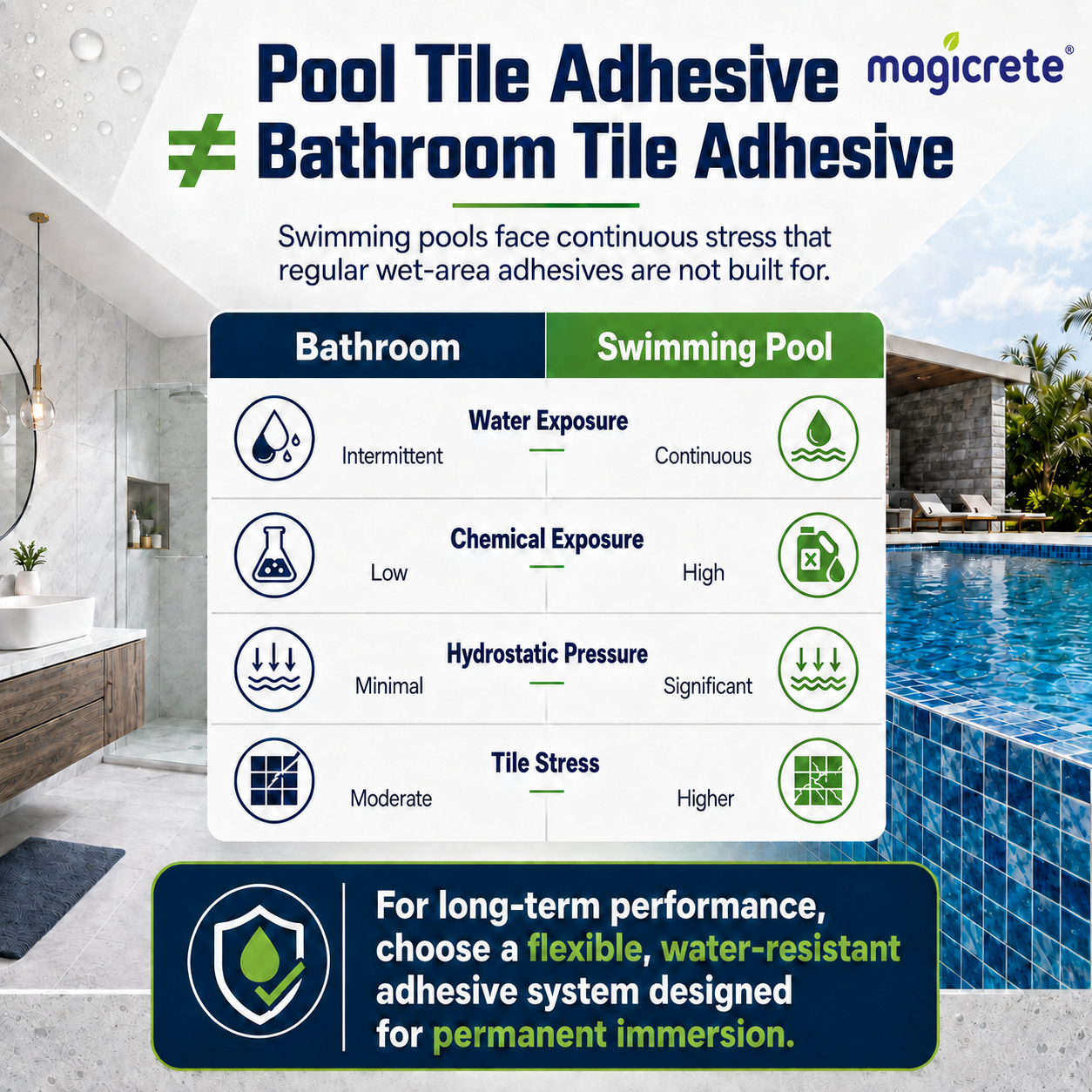
A bathroom and swimming pool may both involve wet conditions, but the stress placed on their tile systems is very different.
Factor | Bathroom | Swimming Pool |
Water Exposure | Intermittent | Continuous |
Chemical Exposure | Low | High |
Hydrostatic Pressure | Minimal | Significant |
Tile Stress | Moderate | Higher |
Adhesive Requirement | Standard | Higher performance |
Swimming pools remain exposed to water for extended periods, while chlorine, salt, cleaning chemicals, temperature changes, and structural movement can place additional stress on the adhesive bond.
Can Bathroom Tile Adhesive Be Used in Swimming Pools?
No. Bathroom-grade tile adhesive is generally designed for intermittent moisture rather than continuous submersion. Swimming pools require an adhesive system suitable for prolonged water exposure, movement, and the specific conditions of the project.
Why Do Swimming Pool Tile Installations Fail More Often Than Regular Installations?
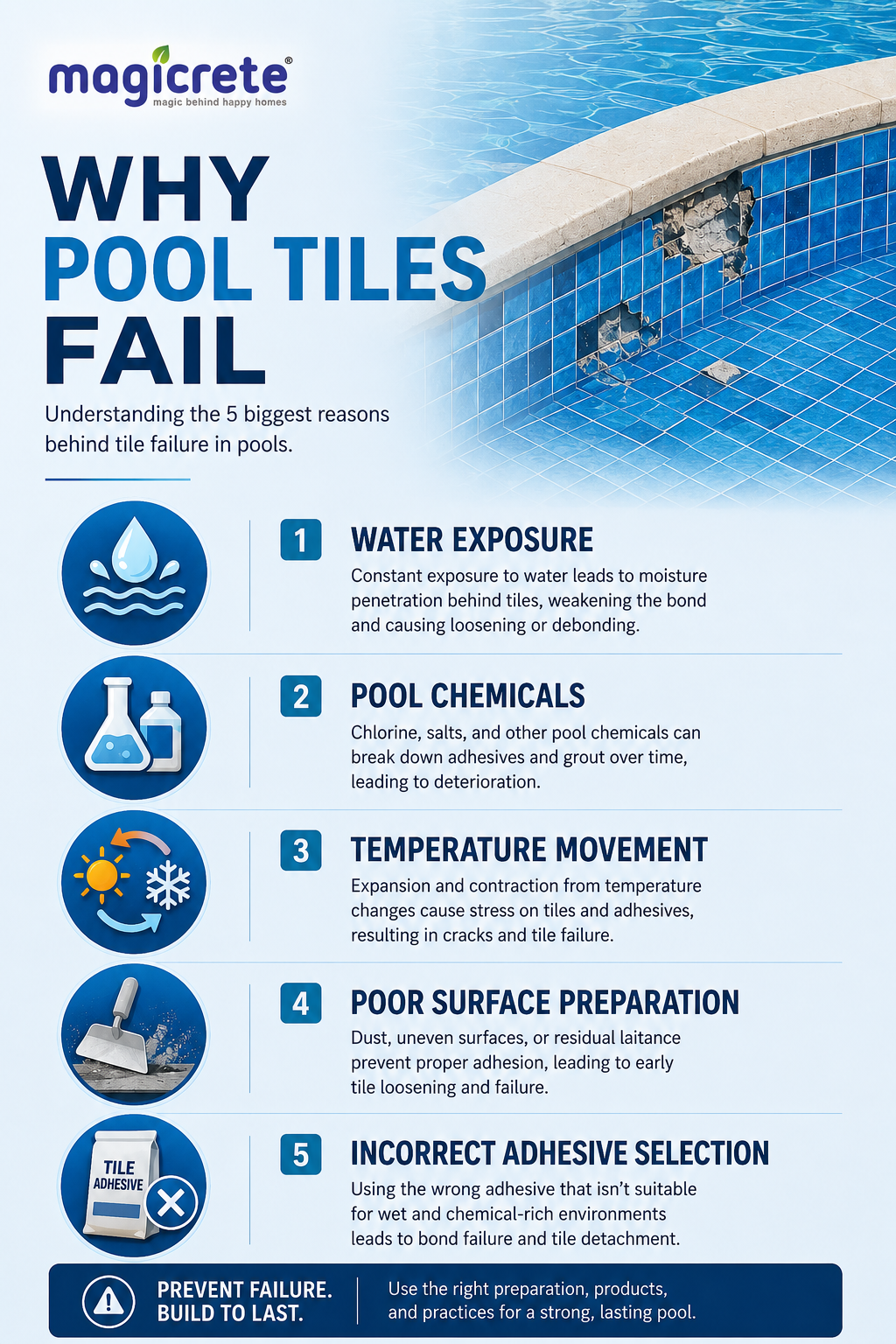
Pool tile failures can result from a combination of continuous water exposure, chemicals, temperature changes, poor preparation, inadequate coverage, and unsuitable adhesive selection.
Continuous Water Exposure Creates Constant Bond Stress
Can water affect tile adhesion over time?
Yes. Continuous immersion places ongoing stress on the adhesive bond. An adhesive system not designed for prolonged water exposure may lose performance over time.
Pool Chemicals Can Affect Tile Systems
Chlorine-treated pools, saltwater pools, and cleaning chemicals create regular exposure to the tile system.
This is why both adhesive and grout should be selected according to the conditions of the pool.
Temperature Changes Cause Expansion and Contraction
Outdoor, rooftop, and heated pools can experience repeated temperature changes.
This creates expansion and contraction within the tile system. A suitable flexible adhesive can help accommodate movement where required by the project.
Poor Surface Preparation Leads to Early Failures
Even a high-performance adhesive cannot compensate for a weak or contaminated substrate.
Dust, loose screed, surface contamination, or inadequate preparation can reduce bond performance and contribute to premature tile failure.
What Makes a Good Swimming Pool Tile Adhesive?
A pool-ready adhesive needs to perform under several demanding conditions.
Water Resistance
Pool tiles can remain continuously submerged, so the adhesive should be suitable for prolonged water exposure rather than only occasional splashing.
Flexibility
Pools can experience structural and thermal movement. A flexible adhesive system can help accommodate movement and reduce stress on the tile bond.
For a better understanding of adhesive performance classifications, see our tile adhesive classifications guide.
Bond Strength
Bond strength under wet or submerged conditions is particularly important for pool applications.
When comparing products, review the relevant technical data and application recommendations rather than relying only on general claims of high strength.
Chemical Resistance
Pool water can contain chlorine, salt, and cleaning chemicals.
The complete tile system should therefore be selected with chemical exposure in mind, including the grout used between the tiles.
Long-Term Durability
Pool tiles are not replaced as frequently as many indoor tiled surfaces.
The adhesive system should therefore be selected with long-term performance in mind rather than only initial installation requirements.
What Adhesive Classification Should You Look For?
Adhesive classification can help identify whether a product is appropriate for a particular installation.
Common classification indicators include:
- C2: Improved cementitious adhesive
- T:Reduced slip
- E:Extended open time
- S1:Deformable adhesive
- S2: Highly deformable adhesive
The appropriate classification depends on the pool design, substrate, tile, movement, and project requirements.
Always check the product's technical data sheet before specifying an adhesive for a swimming pool.
Swimming Pool Tile Adhesive and Grout Must Work Together
Adhesive selection is only one part of a pool tile system. Grout also plays an important role because the joints are directly exposed to pool water and chemicals.
Can Grout Compensate for Poor Adhesive Performance?
No.
Adhesive bonds the tile to the substrate, while grout fills and seals the joints.
A high-performance grout cannot compensate for a weak adhesive bond, and a strong adhesive cannot correct an unsuitable or poorly installed grout system.
For wet and demanding applications, explore the Tile Grout category.
Is Epoxy Grout Suitable for Swimming Pools?
Epoxy-based grout is generally preferred for many pool applications because of its low water absorption and resistance to chemical exposure.
The appropriate grout should still be selected according to the project requirements and manufacturer's recommendations.
For a detailed comparison, see our epoxy grout vs cement grout guide.
Where Do Swimming Pool Tile Installations Need Higher Adhesive Performance?
Different pool designs create different installation demands.
Infinity Pools
Infinity pools experience continuous water exposure, with additional stress around overflow and edge areas.
Water resistance and proper system detailing are particularly important.
Rooftop Pools
Rooftop pools can experience structural movement and significant temperature variation.
Flexibility becomes an important consideration when selecting the adhesive system.
Heated Pools
Heated pools undergo repeated temperature changes between the pool water and surrounding environment.
The adhesive system should be suitable for the expected thermal movement.
Commercial and Hotel Pools
Commercial pools generally experience higher foot traffic and more frequent maintenance.
Long-term durability and bond retention become particularly important.
Glass Mosaic Pools
Glass mosaics have smaller individual bonding surfaces, making accurate installation, adhesive coverage, and bond performance especially important.
How to Choose the Right Swimming Pool Tile Adhesive?
There is no single adhesive that is automatically best for every pool.
Consider these factors before making a selection.
Based on Tile Type
Vitrified tiles, porcelain tiles, glass mosaics, and natural stone can have different bonding requirements.
Start by identifying the tile type and its absorption characteristics.
For more guidance, see our best tile adhesive for different tiles guide.
Based on Pool Location
Indoor pools generally have more controlled conditions than outdoor and rooftop pools.
Outdoor pools may experience direct sunlight, temperature changes, rain, and wider environmental variation.
Based on Water Exposure
Consider whether the installation is:
- Permanently submerged
- In a splash zone
- Around an overflow edge
- Around an infinity edge
- Exposed to frequent water contact
Based on Pool Usage
Residential, hotel, club, and competition pools can have different levels of traffic and maintenance.
The expected usage should be considered when determining the required durability.
Based on Pool Conditions
Also consider:
- Water temperature
- Chemical exposure
- Structural movement
- Substrate condition
- Tile format
- Installation location
Common Mistakes That Cause Swimming Pool Tile Failures
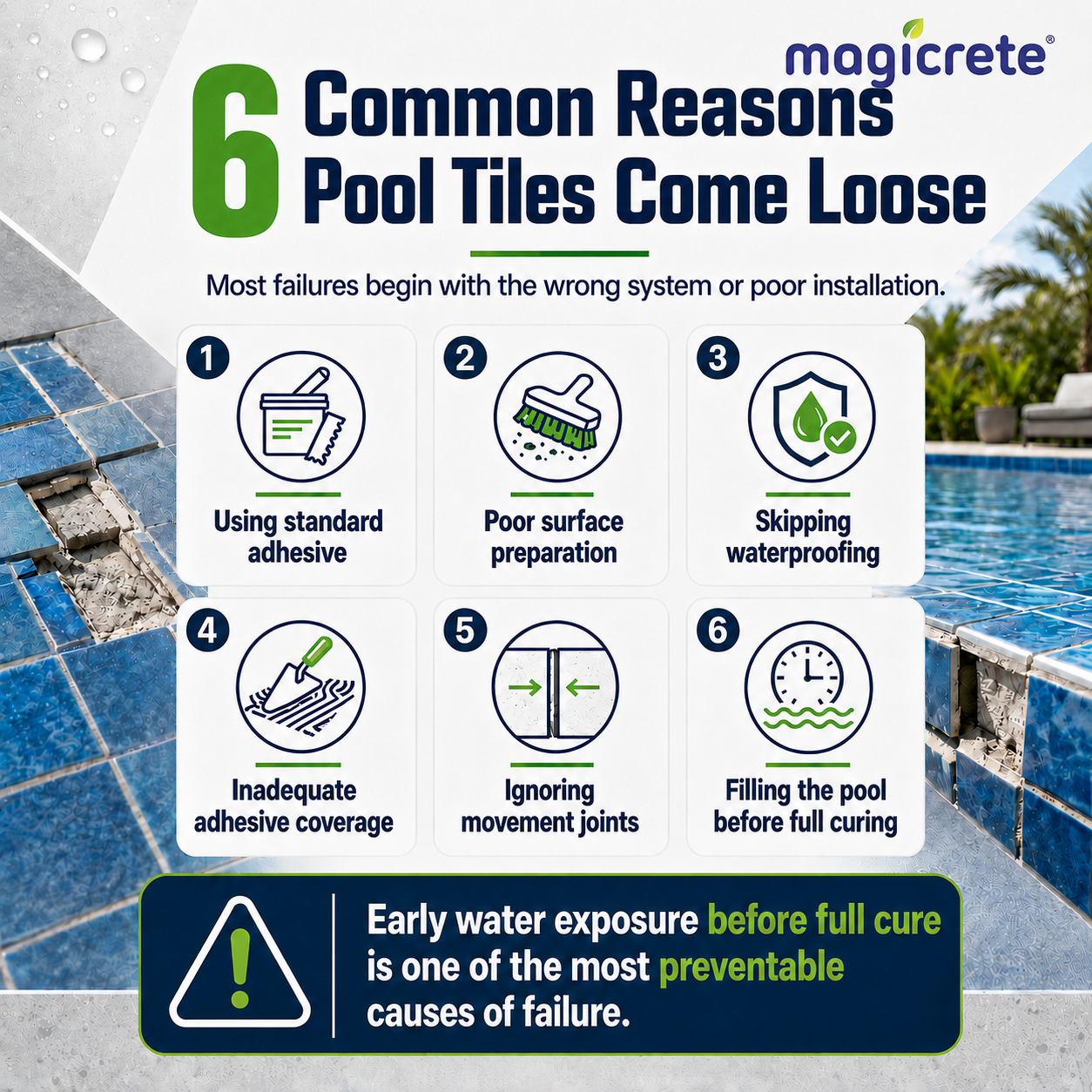
Using Standard Tile Adhesive Instead of a Suitable High-Performance System
A standard adhesive may not be designed for continuous immersion, movement, or the chemical conditions found in pools.
Poor Surface Preparation
Skipping cleaning, priming, or substrate assessment can undermine the adhesive bond.
Skipping or Under-Specifying Waterproofing
Tile adhesive and grout should not be treated as substitutes for a separate waterproofing system.
Inadequate Adhesive Coverage
Incomplete coverage can leave voids behind tiles where water can collect and contribute to bond problems.
Ignoring Expansion and Movement Joints
Movement joints help accommodate structural and thermal movement. Omitting them can concentrate stress in the tile system.
Filling the Pool Before Full Curing
The pool should not be filled before the adhesive has reached the required curing condition.
Always follow the specific product's technical data sheet.
For more installation guidance, see our common tile adhesive mistakes guide.
Expert Pre-Installation Checklist for Pool Tiling Projects
Before starting the installation, check:
- Is the substrate structurally sound?
- What type of tile is being installed?
- Is the pool indoor or outdoor?
- Will the tiles remain permanently submerged?
- What level of chemical exposure is expected?
- Is a suitable waterproofing membrane specified?
- Has adequate curing time been planned?
- Are movement joints included?
- Is the selected adhesive compatible with the tile and substrate?
- Is the grout suitable for the pool environment?
How Much Swimming Pool Tile Adhesive Do You Need?
The quantity required depends on factors such as tile size, substrate condition, adhesive bed thickness, coverage, and installation method.
Avoid estimating adhesive quantity from the pool's surface area alone.
For project quantity planning, use the Tile Adhesive Calculator.
Conclusion
Swimming pool environments place greater demands on tile installations than most indoor wet areas.
Water resistance alone is not enough. The complete system should consider:
- Adhesive performance
- Flexibility
- Wet bond strength
- Chemical exposure
- Waterproofing
- Grout selection
- Surface preparation
- Adhesive coverage
- Movement joints
- Proper curing
Because pool conditions vary by design, location, tile type, and usage, the adhesive and grout should be selected according to the specific project rather than a generic recommendation.
For help selecting a suitable adhesive system, use the Tile Adhesive Selector.
FAQ's
1. Which adhesive is best for swimming pool tiles?
A flexible, high-bond adhesive suitable for continuous water exposure is generally preferred.
2. Can regular tile adhesive be used in a swimming pool?
No. Regular tile adhesive may not be designed for continuous submersion, chemical exposure, and pool movement.
3. Is waterproof tile adhesive enough for pool installations?
No. Pool installations also require suitable bonding, flexibility, grout, waterproofing, and correct installation.
4. What causes swimming pool tiles to come loose?
Common causes include poor preparation, unsuitable adhesive, inadequate coverage, water exposure, movement, and premature pool filling.
5. Can vitrified tiles be used in swimming pools?
Yes, provided the adhesive and grout system is suitable for the tile and pool conditions.
6. What type of grout should be used for swimming pools?
Epoxy-based grout is generally preferred for many pool applications because of its water and chemical resistance.
7. How long should tile adhesive cure before filling a swimming pool?
Follow the specific adhesive manufacturer's technical data sheet and do not fill the pool before the required curing period.
One-Stop Solution for all your Construction Needs
Contact Us