
-
Can You Do Tile Installation During Monsoon? Contractor Guide
-

Magicrete
27 Aug 2026
Introduction
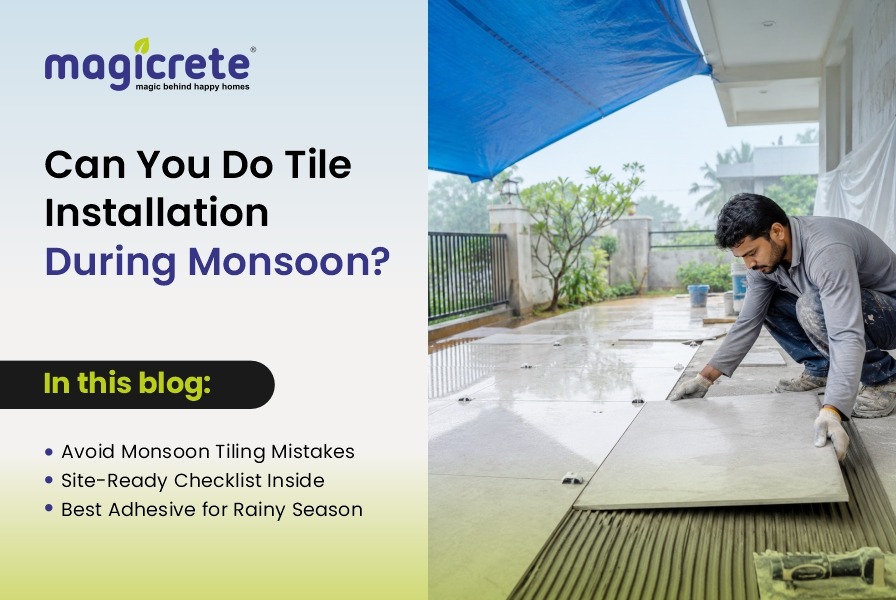
Monsoon does not automatically mean tile installation has to stop. For contractors, builders and site engineers in India, the real question is not whether tiling can be done during the rainy season, but how site conditions, substrate moisture, adhesive selection and curing time should be managed differently. Interior tiling in covered spaces can generally continue during monsoon when the substrate is ready and the area is adequately ventilated. Exterior and semi-open tiling needs greater caution because fresh adhesive and grout can be exposed directly to rain. The key is to control moisture rather than simply follow the calendar. Quick answer: Yes, tile installation can be carried out during monsoon, but fresh tile work must be protected from rain, substrates must be sufficiently dry, and curing and grouting timelines may need to be extended.
Why Is Tile Installation More Challenging During Monsoon?
Monsoon changes the conditions under which tile installation normally takes place.
High humidity can slow moisture evaporation from cement-based materials, while damp substrates can retain moisture for longer than expected. Direct rainfall creates an additional risk for balconies, terraces, façades and other exposed areas.
Tile adhesive gains strength through hydration, but the surrounding site conditions still affect how the material behaves. During prolonged periods of high humidity, an adhesive layer may take longer to set than it would in drier conditions.
The substrate is equally important. Plaster and screed need to complete their recommended curing and drying period before tiling begins. During monsoon, humid air can slow this process. A surface may look dry while retaining moisture underneath.
This is why substrate readiness should be checked rather than judged only by appearance.
For a broader understanding of adhesive types, applications and selection, contractors can also refer to Magicrete's tile adhesive guide.
What happens if a damp substrate is tiled too early?
When a tile is installed over a substrate that has not adequately dried, moisture can become trapped beneath the low-absorption tile surface.
This can contribute to: Poor or delayed adhesive curing; hollow-sounding tiles; tile debonding or lifting; efflorescence; grout discolouration; longer waiting periods before the area can be used.
What Can Go Wrong When Tiling During Monsoon?
Poorly planned monsoon tiling may not fail immediately. Some problems can become visible weeks or months after installation, making the original cause more difficult to identify.
1. Hollow-sounding tiles and debonding
A damp substrate, inadequate adhesive coverage or incomplete curing can weaken the bond between the tile and substrate. One early warning sign can be a hollow sound when tiles are tapped. In more serious cases, tiles may become loose or lift from the surface.
2. Efflorescence
Moisture can carry soluble salts through cementitious materials. When the moisture reaches the surface and evaporates, it can leave behind a white, chalky deposit known as efflorescence. Controlling moisture movement through proper substrate preparation and installation is therefore important during wet weather.
3. Uneven grout curing
Grout is also affected by moisture and curing conditions. Uneven exposure to humidity or water can contribute to inconsistent curing, shrinkage cracks, colour variation or a chalky surface. For wet areas, contractors should select grout according to the expected exposure conditions. Explore the tile grout range when evaluating grout options for different applications.
4. Longer curing and waiting times
High humidity can change the time required for cement-based materials to reach the required condition for subsequent work. Instead of forcing the project to follow a dry-season schedule, contractors should allow sufficient time for the adhesive and grout to set according to the relevant manufacturer's recommendations.
5. Fungal and algae growth
Warm, humid and poorly ventilated areas can create favourable conditions for fungal or algae growth, particularly around damp joints, bathrooms, utility areas and shaded external surfaces. Good ventilation, appropriate drainage and proper moisture management can help reduce these risks.
Can Tiles Be Installed During Monsoon?
Yes. Tile installation can continue during monsoon if site conditions are suitable and the fresh installation is protected from excessive moisture and rain.
The level of risk depends heavily on where the tiling is being carried out.
Covered interior areas are generally easier to manage because contractors can control direct rain exposure and improve ventilation. Exterior and semi-open areas require more careful planning because rain can directly affect fresh adhesive and grout before they have adequately set.
Important factors: substrate moisture; weather conditions; ventilation; adhesive selection; grout selection; protection from direct rain; adequate curing time; proper drainage; waterproofing where required.
Interior vs Exterior Tile Installation During Monsoon
Not all tile installation sites have the same level of monsoon risk.
Interior tile installation
Tiling in enclosed bedrooms, living rooms and other covered areas can generally continue during monsoon when the substrate is ready. Bathrooms and kitchens can also be tiled, provided the areas are protected from direct rain and have adequate ventilation. The primary concerns are substrate moisture, curing and air movement.
Exterior tile installation
Balconies, terraces, porches, façades and other exposed areas require considerably more caution. A rain shower shortly after installation can interfere with fresh adhesive or grout before they have adequately set.
For exterior work, contractors should check the forecast, schedule work around suitable weather windows, protect freshly installed areas, avoid direct rain exposure during curing, ensure correct surface slope and drainage, and consider waterproofing requirements before tile installation.
Practical rule: If an exterior surface cannot be adequately protected from rain during the required curing period, postponing the installation is generally safer than rushing the work.
Monsoon Tile Installation Checklist for Contractors
Before starting tile installation during the rainy season, check the following.
1. Check substrate moisture
Do not rely only on the surface appearance. Where appropriate, use a moisture meter or the applicable project testing method to determine whether the substrate is ready for tiling.
2. Confirm curing and drying time
Check that the plaster or screed has completed the manufacturer's recommended curing and drying period. Do not reduce the required preparation time simply to recover lost project days.
3. Check the weather forecast
For exterior work, review the forecast for the next 24–48 hours and plan installation around suitable weather windows.
4. Improve ventilation
For interior work, maintain cross-ventilation wherever possible. Stagnant humid air can make drying and curing more difficult.
5. Protect freshly installed work
Use suitable temporary covers or shelters wherever rain exposure is possible. Do not remove protection merely because the surface appears dry.
6. Plan additional curing time
Avoid assuming that the normal dry-season timeline will always apply during prolonged humid weather.
7. Check installation conditions on site
Test adhesive coverage and working characteristics on a small area before proceeding with a larger installation.
Does Grout Selection Matter During Monsoon?
Yes. Grout joints can experience prolonged exposure to moisture, especially in bathrooms, balconies, terraces and exterior applications.
Cementitious grout is naturally porous, while epoxy-based grout is designed to provide lower water absorption and greater resistance to prolonged moisture exposure.
The correct choice depends on the application and project requirements. Contractors should therefore evaluate the adhesive and grout as a complete installation system rather than treating grout as an afterthought.
For wet-area applications, see the guide on epoxy grout vs cement grout for bathrooms and wet areas.
How Should Contractors Choose Tile Adhesive During Monsoon?
Adhesive selection becomes particularly important when site conditions are humid or exposed to moisture.
Contractors should choose an adhesive according to the tile type, substrate, application area and manufacturer's recommended use rather than simply selecting the most readily available material.
Adhesives formulated for the intended application can provide more predictable performance than relying on an unsuitable cement-sand mix.
For projects where contractors need to compare suitable options, use Magicrete's Tile Adhesive category rather than selecting an individual product without considering the application. For additional help choosing an adhesive, Magicrete also provides a Tile Adhesive Selector. Where quantity planning is required, the Tile Adhesive Calculator can also help with project estimation.
What About Waterproofing Under Tiles During Monsoon?
Tile installation should not be treated as a substitute for waterproofing.
For balconies, terraces and other areas exposed to sustained water, the waterproofing system should be planned before the tile installation begins.
A waterproofing membrane or appropriate waterproofing system may be required depending on the construction detail, exposure and project specification.
This becomes especially important in monsoon-prone areas because the substrate has less opportunity to dry between rainfall events.
For projects where waterproofing is part of the system, explore Magicrete's Waterproofing Solutions.
Important: Waterproofing requirements should be determined according to the project design, substrate condition, exposure and applicable system recommendations. Do not assume that a tile adhesive or grout alone provides waterproofing for a terrace or balcony.
Best Practices for Tile Contractors During Monsoon
A few changes to normal site planning can significantly reduce avoidable problems.
Schedule exterior work around weather windows
Use dry periods for exterior tiling wherever possible. Interior work can be prioritised when rain makes exposed installation impractical.
Do not rush the curing process
A few additional days in the programme can be far less disruptive than removing and replacing debonded tiles after handover.
Protect fresh grout
Fresh grout should be protected from direct rain until it has adequately set.
Maintain proper slope and drainage
Exterior surfaces should have suitable slope and drainage so water does not remain pooled around tile joints.
Check installation conditions on site
Technical data sheets provide controlled-condition information, but actual site conditions can vary significantly during monsoon. A small-area trial can help contractors assess adhesive working characteristics and coverage before scaling up the installation.
How Long Should You Wait Before Grouting Tiles During Monsoon?
There is no single fixed waiting period that should automatically be applied to every monsoon installation.
Humidity, substrate condition, adhesive type, tile format and site ventilation can all influence the actual setting condition.
The safer approach is to follow the adhesive manufacturer's recommended requirements and confirm that the adhesive bed has adequately set before grouting. Do not use a standard dry-season timeline simply because the project schedule requires it.
Can You Tile a Bathroom or Kitchen During Monsoon?
Generally, yes. Because bathrooms and kitchens are usually enclosed, contractors can control direct rain exposure more easily than on balconies or terraces.
The important checks are: substrate readiness; adequate ventilation; protection from water; correct grout selection; adequate curing time.
Should Exterior Tiling Be Avoided During Heavy Monsoon?
Exterior tiling does not necessarily have to stop for the entire monsoon season. However, installation should be minimised during periods of continuous heavy rainfall.
Where possible, schedule exposed work during a suitable dry window and provide temporary protection for newly installed areas. If adequate protection cannot be maintained, postponing the installation is generally preferable to accepting unnecessary bonding and curing risks.
Does the Tile Type Affect Monsoon Installation?
Yes, to an extent. Vitrified and other dense, low-absorption tiles absorb less water themselves, but the adhesive bed and substrate underneath the tile can still be affected by moisture.
Natural stone can introduce additional considerations because some stone types are more porous and can be more susceptible to staining or moisture-related issues.
Therefore, tile type, substrate and installation environment should all be considered when selecting the installation system.
For more guidance on choosing adhesive according to tile type, read Best Tile Adhesive for Different Tiles.
Key Takeaway for Contractors
Monsoon does not mean tile installation has to stop. It means the installation process needs tighter moisture control.
Before starting work, contractors should verify substrate readiness, check weather conditions, select materials appropriate for the application, protect fresh work from rain and allow sufficient curing time.
For interior projects, controlled site conditions and adequate ventilation can make monsoon installation manageable. For exterior projects, weather windows, rain protection, drainage and waterproofing become much more important.
The goal is not simply to finish the tiling on schedule. It is to ensure that the installation remains reliable after the project is handed over.
Frequently Asked Questions
Is it safe to install tiles during monsoon?
Yes. Tile installation can continue during monsoon when the substrate is sufficiently ready, direct rain is controlled and appropriate curing time is allowed.
Can bathroom tiles be installed during monsoon?
Generally, yes. Enclosed bathrooms are easier to manage because direct rain exposure can be controlled. Substrate dryness and ventilation remain important.
Can tiles be installed on a balcony during monsoon?
It is possible, but balcony tiling carries greater risk because of direct rain exposure. Work should ideally be scheduled around suitable weather conditions, with proper protection, drainage and waterproofing considerations.
Does humidity affect tile adhesive?
Yes. High humidity can affect moisture evaporation and may extend setting or curing times depending on the material and site conditions.
How long should tile adhesive cure during monsoon?
There is no universal monsoon curing time. Follow the adhesive manufacturer's recommended requirements and consider the actual site conditions before proceeding with subsequent work.
Should tiles be installed over a damp screed?
No. A substrate should meet the applicable manufacturer's and project requirements for curing and moisture before tiling begins.
Which is better for wet areas: epoxy grout or cement grout?
The appropriate grout depends on the application. Epoxy grout generally offers lower water absorption and can be worth considering for areas exposed to prolonged moisture, while cementitious grout may be suitable for other applications.
Is waterproofing required under terrace tiles?
For terraces and other areas with sustained water exposure, an appropriate waterproofing system should generally be considered as part of the construction system. Tile adhesive and grout should not be treated as substitutes for waterproofing.
Content
- Introduction
- Why Is Tile Installation More Challenging During Monsoon?
- What Can Go Wrong When Tiling During Monsoon?
- Can Tiles Be Installed During Monsoon?
- Interior vs Exterior Tile Installation During Monsoon
- Monsoon Tile Installation Checklist for Contractors
- Does Grout Selection Matter During Monsoon?
- How Should Contractors Choose Tile Adhesive During Monsoon?
- What About Waterproofing Under Tiles During Monsoon?
- Best Practices for Tile Contractors During Monsoon
- How Long Should You Wait Before Grouting Tiles During Monsoon?
- Can You Tile a Bathroom or Kitchen During Monsoon?
- Should Exterior Tiling Be Avoided During Heavy Monsoon?
- Does the Tile Type Affect Monsoon Installation?
- Key Takeaway for Contractors
- Frequently Asked Questions
