
-
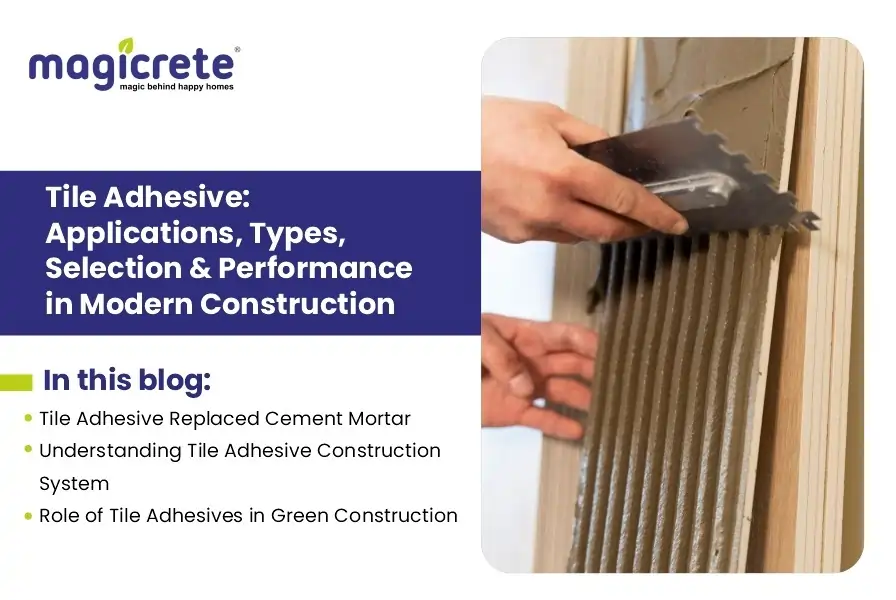
Tile Adhesive: Applications, Types, Selection & Performance in Modern Construction
-

Introduction
The construction landscape has evolved. This shift in tiling practice highlights the difference between cement and tile adhesive, as traditional mortar relies on absorption and mechanical grip, whereas modern adhesives use engineered chemical bonding for stronger and more durable results.
Today, architects and structural engineers deal with large-format vitrified tiles, natural stones, and composite materials that demand a bonding agent capable of handling high stress, thermal movement, and low porosity.
It also under scores the role of construction chemicals in modern construction, where specialised materials enhance durability, speed, and consistency on site. This guide explores the technical shift from mortar to adhesives, the science of selection, and why correct application is non-negotiable for project success.
Why Tile Adhesive Has Replaced Cement Mortar in Modern Construction?
The shift from traditional mortar to specialized adhesives is driven by necessity, not just convenience. Modern construction operates on tighter schedules and higher performance expectations, both of which traditional mortar struggles to meet.
The Shift in Materials: Porosity and Bonding
Historically, tiles were highly porous (high water absorption), allowing cement slurry to penetrate the back of the tile and create a mechanical grip. This makes selecting the best adhesive for vitrified tiles critical, as low-absorption surfaces demand high polymer content for reliable chemical bonding. Without pores to grip, cement mortar fails to bond effectively, leading to the dreaded "hollow sound" and eventual debonding.
Limitations of Cement Mortar
Lack of Flexibility: Cement mortar is rigid. It cannot accommodate the differential thermal expansion between the substrate (concrete/brick) and the tile, inevitably causing cracks.
Curing Dependency: Cement-based materials require adequate moisture to hydrate and achieve their designed strength. In traditional sand–cement mortar, proper curing is not possible once tiles are fixed, as external water cannot reach the bond layer behind the tile. This results in incomplete hydration and reduced bond strength. Modern polymer-modified tile adhesives overcome this limitation through water-retentive polymers that store moisture within the adhesive matrix and release it gradually, enabling internal curing and ensuring optimum strength development without external curing.
Debonding Risk: As tile sizes increase (e.g., 4x8 ft slabs), the weight and shear stress overwhelm the weak bond strength of sand-cement mixtures.
Understanding Tile Adhesive as a Construction System
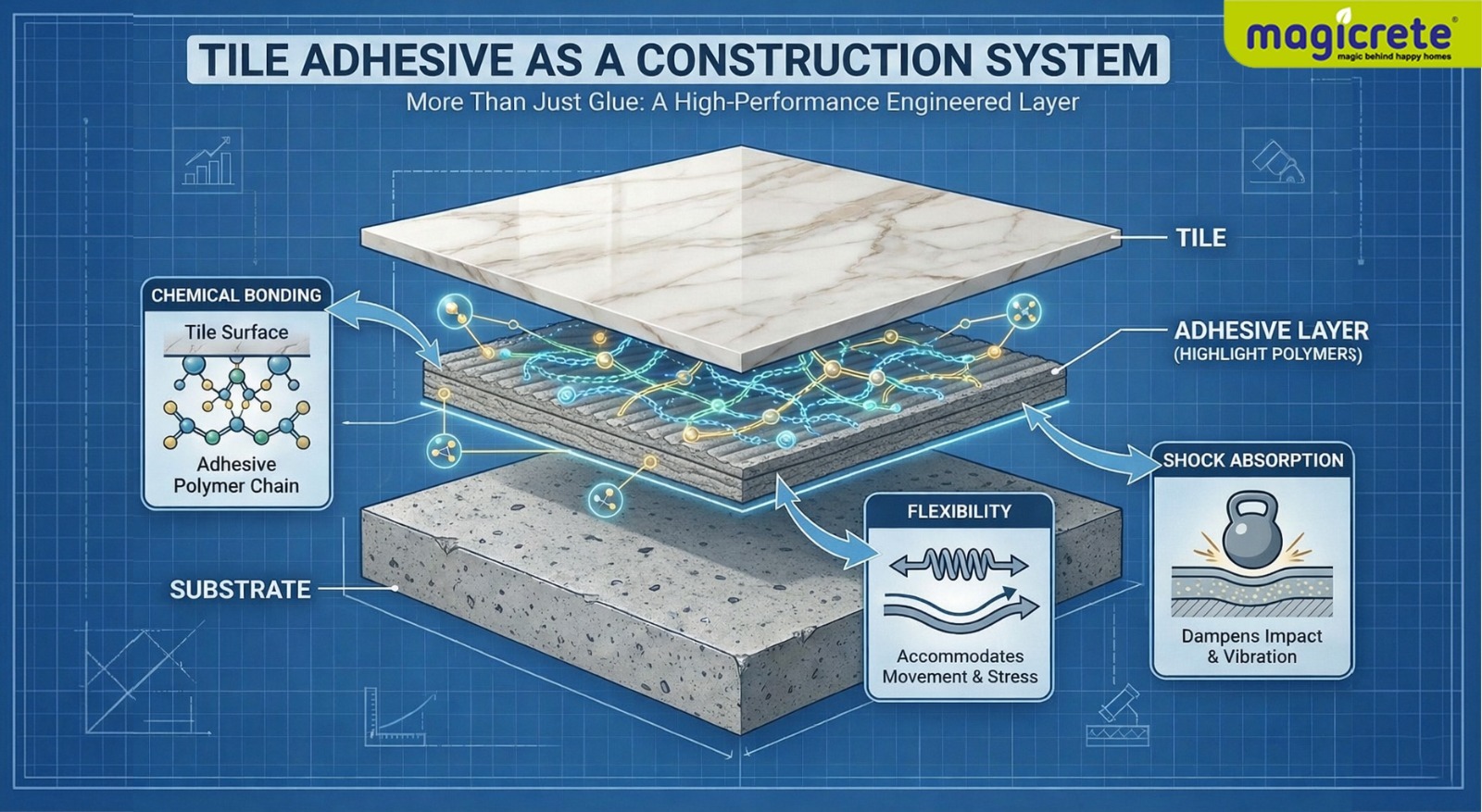
To specify the right product, one must view tile adhesive not as "glue" but as a polymer-modified construction system.
Role of Polymers and Bonding Mechanisms
Modern adhesives are a mix of cement, graded sand, and proprietary polymers. These polymers are the game-changer. They provide the chemical bond necessary for non-porous tiles and introduce flexibility (deformability) to the system. This allows the adhesive layer to absorb shock and vibration without transferring stress to the tile.
Interaction Between Tile, Adhesive, and Substrate
The "Open Time" (how long you can leave the adhesive on the wall before placing the tile) and "Pot Life"(how long the mix stays usable in the bucket) are engineered properties. A mismatch here, such as using a fast-setting adhesive on a complex pattern floor; can lead to microscopic voids and bond failure.
Why Performance ≠ Brand Name
Understanding these standards is simpler when explored via tile adhesive classifications, which outline bond strength and flexibility requirements for various site conditions. Engineers must look for technical specifications like Tensile Adhesion Strength and Shear Adhesion Strength rather than just brand recognition. Always look for a BIS-certified product.
Types of Tile Adhesives Based on Application Requirements
A "one-size-fits-all" approach is the primary cause of tiling failures. Different zones in a building subject tiles to different stresses.
1. Tile Adhesive for Walls and Floors
Vertical applications face gravity. Adhesives for walls require excellentslip resistanceto hold heavy tiles in place while the adhesive cures. Floor adhesives, conversely, must prioritize compressive strength and full coverage to prevent cracking under load.
2. Tile Adhesive for Exterior Applications
For outdoor installations, the advantages of using exterior tile adhesive over mortar become evident, especially in handling thermal expansion and weather exposure without risking debonding. They are subjected to:
Thermal Shock: Rapid expansion and contraction due to sunlight and night cooling.
Weathering: Direct rain and UV exposure.
Exterior adhesives must be highly polymer-modified to offer high deformability (S1 or S2 grades) to move with the building without cracking the tile.
3. Tile Adhesive for Wet and Submerged Areas
The long-lasting performance of bathroom tiles is ensured by water-resistant tile adhesives, where advanced polymers protect against moisture, pressure, and chemical exposure Standard adhesives may degrade under continuous water pressure or chemical attack (e.g., chlorine in pools).
4. Tile Adhesive for Large-Format and Vitrified Tiles
As tile sizes grow, the margin for error shrinks. Large-format tiles (LFT) require adhesives with extended open times and superior wettability to ensure 100% contact coverage. The adhesive must handle the significant weight and shear stress these large slabs generate.
How to Choose the Right Tile Adhesive for Your Project?
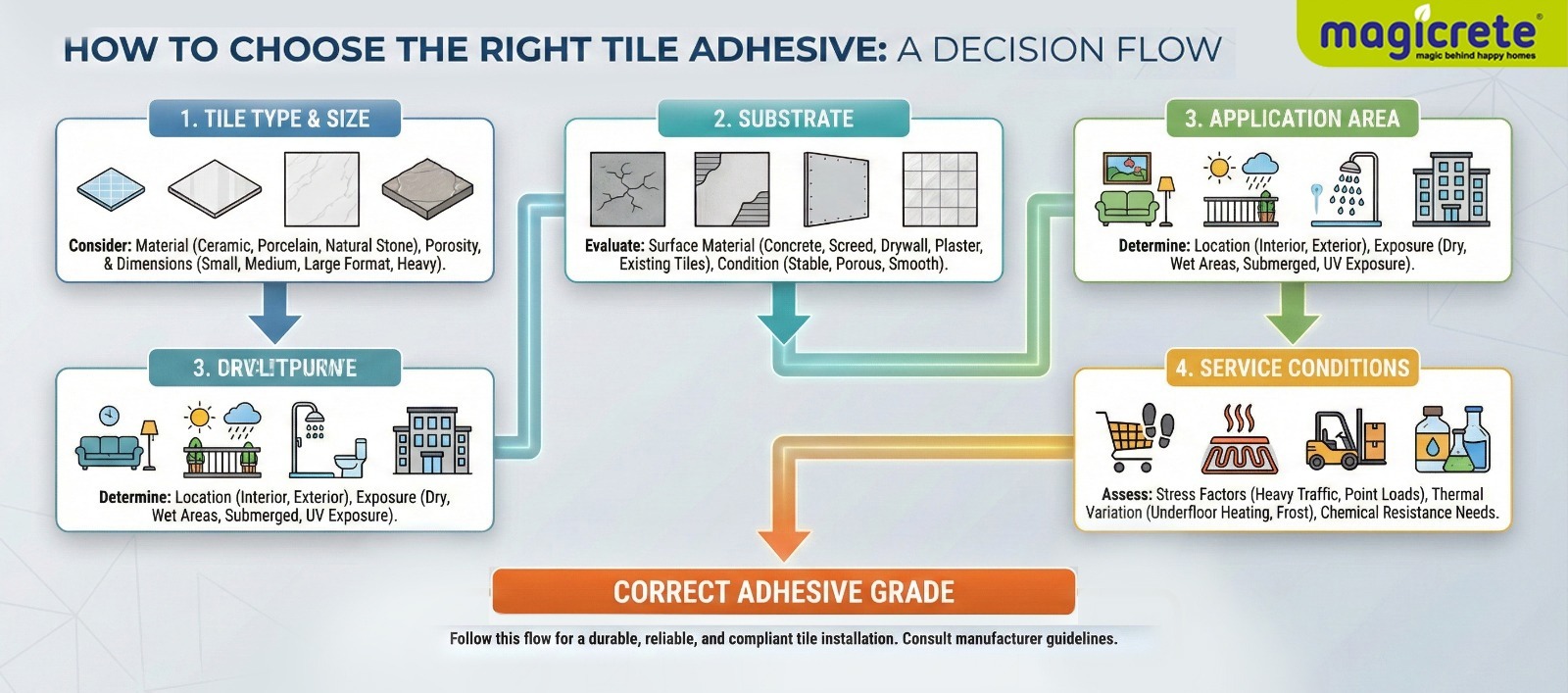
A structured selection process helps in choosing the best tile adhesive for different tiles, ensuring compatibility with tile type, size, substrate, and service conditions.
Tile Type & Size: Is it ceramic, vitrified, or natural stone? Is it a mosaic or a large slab? Heavier, non-porous tiles need higher polymer content.
Substrate Condition: Are you tiling over concrete, plaster, glass, metal, AAC blocks, or existing tiles (tile-on-tile)? Specialized adhesives allow direct application on AAC blocks without thick plaster beds.
Area of Application: Interior vs. Exterior. Vertical vs. Horizontal.
Service Conditions: Will the area face heavy foot traffic, vibration, or extreme temperature fluctuations?
Application Quality Is as Critical as the Adhesive Itself
Many tiling failures occur due to avoidable errors, which are detailed in common mistakes to avoid when applying tile adhesive, including poor surface preparation or wrong trowel choice. Following a comprehensive checklist for long-lasting tile adhesives ensures consistent application quality and minimizes variability that often causes early failures.
Surface Preparation Impact
The substrate must be clean, dry, and sound. Dust or laitance (a weak layer of cement dust) creates a barrier that prevents bonding.
The "Notched Trowel" Rule
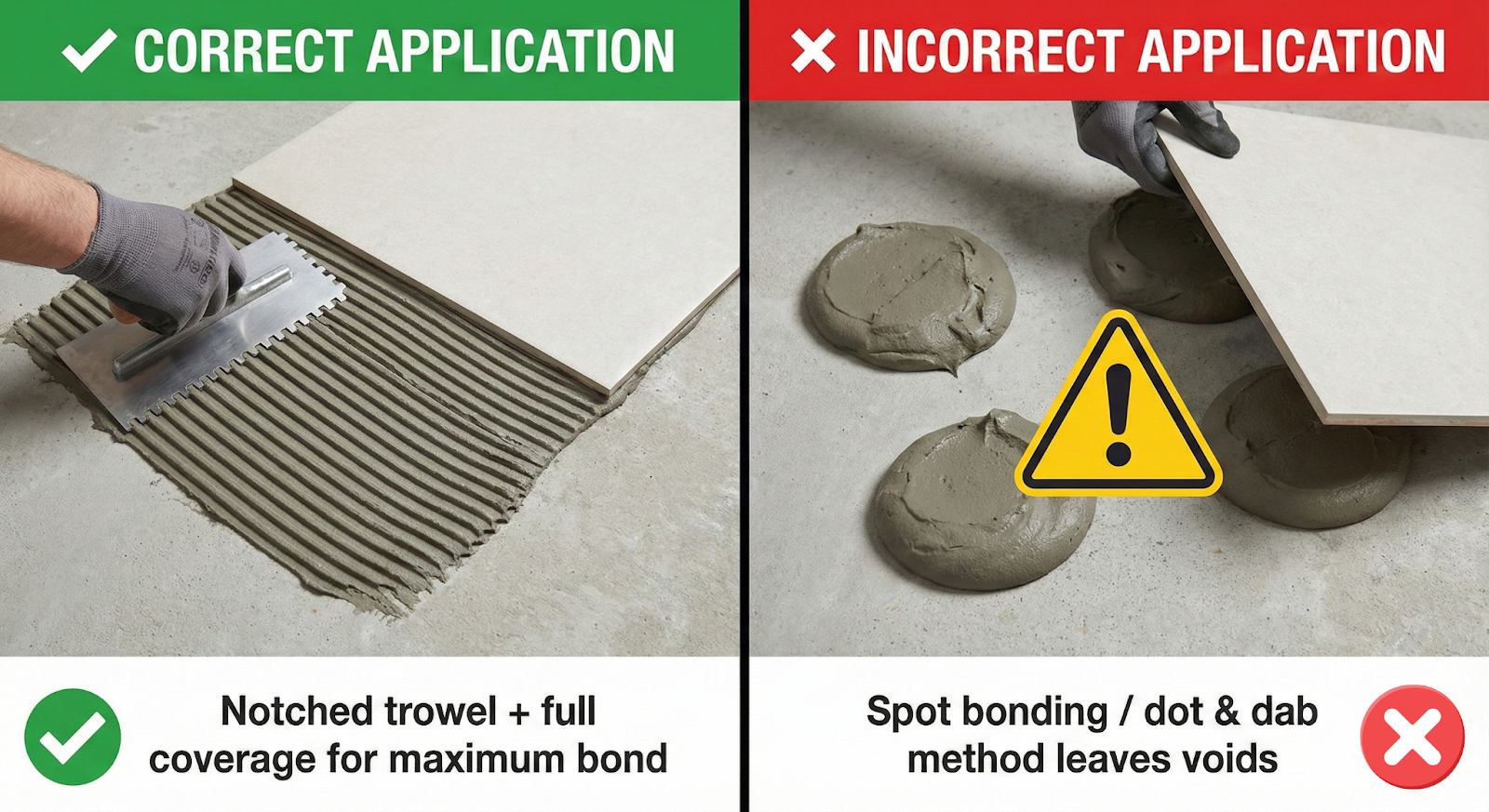
The use of a Notched Trowel is mandatory, not optional. It ensures a uniform thickness of adhesive and creates "ribs" that collapse when the tile is pressed, ensuring maximum coverage. For a complete guide on proper surface preparation and trowel techniques, see How to Prepare a Wall for Tiling and the Importance of Using a Notched Trowel.
- Warning: The "spot bonding" or "dot and dab" method is a major violation of code and a recipe for cracked tiles.
Performance, Durability, and Lifecycle Cost Perspective
While a bag of tile adhesive costs more than a bag of cement, the Total Cost of Ownership (TCO) tells a different story.
Rework Costs: Replacing debonded tiles in an occupied building is 10x more expensive than doing it right the first time.
Asset Value: Cracking and hollow sounds degrade the perceived quality of a premium property.
Speed: Adhesives cure faster and require less bulk material handling, reducing labor costs.
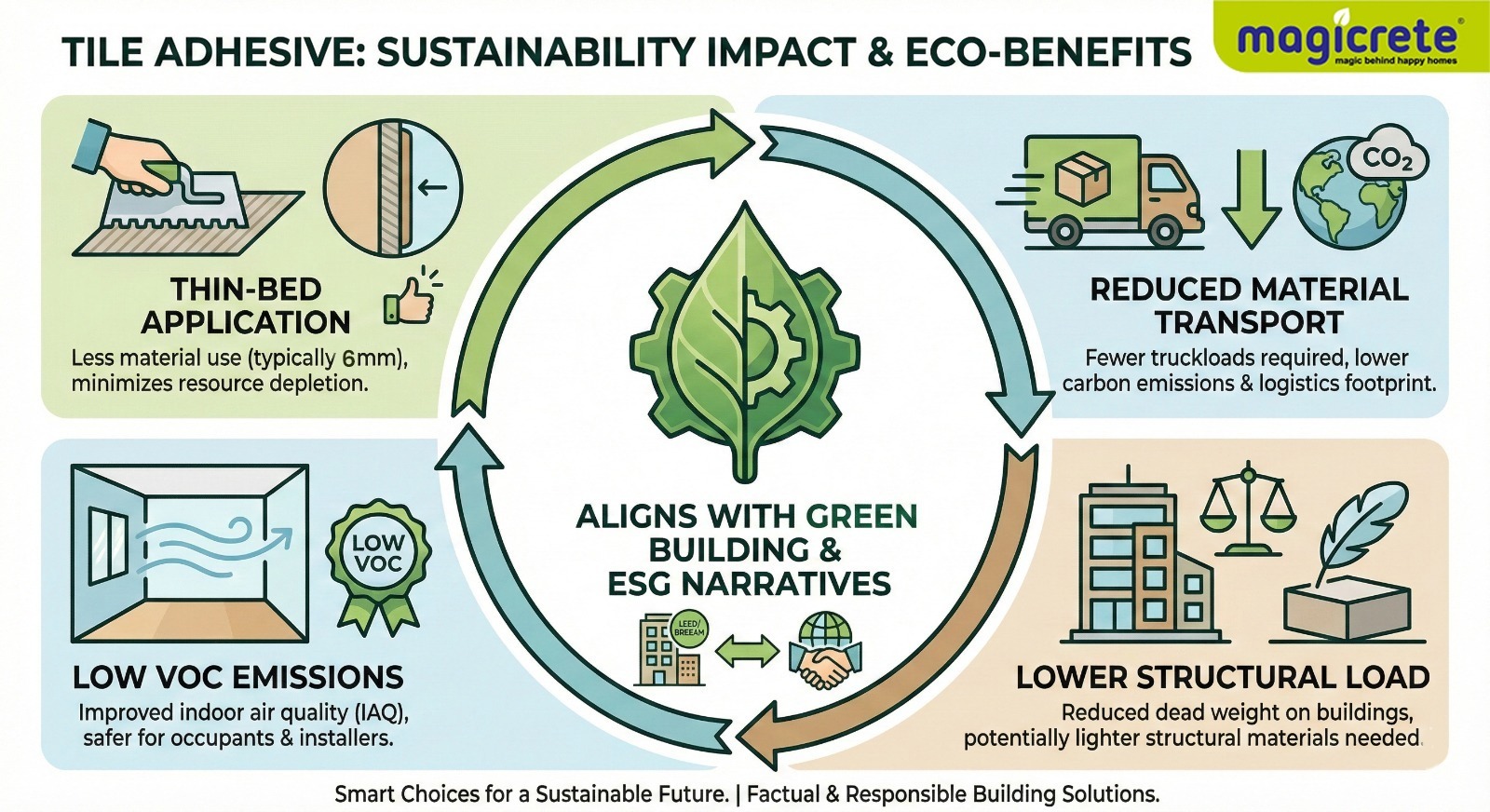
Sustainability and the Role of Tile Adhesives in Green Construction
These considerations also support eco-conscious construction practices, as tile adhesives can reduce material use, lower VOC emissions, and improve lifecycle performance.
Reduced Material Wastage: Adhesives are applied in thin layers (6mm) compared to thick mortar beds (20mm), saving tons of material transport and weight on the building structure.
Low VOCs: Quality adhesives comply with green building standards regarding volatile organic compounds, ensuring better indoor air quality.
Tile Adhesive Is a Strategic Construction Decision
For architects and builders, the choice of tile adhesive influences the durability, speed, and finish quality of the project. It is not merely a purchase; it is a specification decision that safeguards the expensive finishes of a building. Moving from "cement thinking" to "system thinking" is the hallmark of modern, resilient construction.
Looking for a reliable bonding solution?
Explore Magicrete tile adhesive solutions, engineered to meet the diverse and rigorous demands of modern construction performance.
FAQs
What is the difference between tile adhesive and cement mortar?
Cement mortar is a mechanical bonding agent dependent on friction and absorption. Tile adhesive is a polymer-modified chemical bonding agent designed for flexibility, high strength, and non-porous surfaces.
Is tile adhesive necessary for all modern construction projects?
Yes, especially when using vitrified tiles, granite, or large-format slabs. Traditional mortar cannot bond effectively to these low-absorption materials.
Can tile adhesive be used on AAC blocks and precast walls?
Absolutely. Specialized adhesives are designed to bond directly to lightweight substrates like AAC blocks and precast panels without the need for thick plaster beds, provided the surface is prepped correctly.
Does tile adhesive improve construction speed?
Yes. It requires no curing with water, sets faster, and allows for quicker application using notched trowels compared to the slow process of mixing and applying thick mortar beds.
How long does tile adhesive last when applied correctly?
When the correct grade is chosen and applied properly, tile adhesive is permanent. It is designed to last the lifecycle of the building or the tile itself.
One-Stop Solution for all your Construction Needs
Contact Us